ECUMENICAL dialogue

The Anglican-Roman Catholic Dialogue

For over five decades, Anglicans and Roman Catholics have worked together to overcome historic divisions and build a shared life of common witness. This dialogue is driven by two complementary commissions: ARCIC, which addresses theological questions and IARCCUM, which fosters practical cooperation.


The formal theological dialogue between the Anglican Communion and the Catholic Church represents one of the most significant ecumenical journeys of the modern era. Its official beginning followed the conclusion of the landmark Second Vatican Council in 1965, a pivotal moment that ushered in a new era of openness and engagement with other Christian traditions on the part of the Catholic Church.

This new spirit was cemented in 1966 when Pope Paul VI and Archbishop of Canterbury Michael Ramsey met in Rome. Their historic meeting resulted in a Common Declaration and the establishment of a formal, dedicated process to address the theological issues that had divided the two communions for over 400 years.
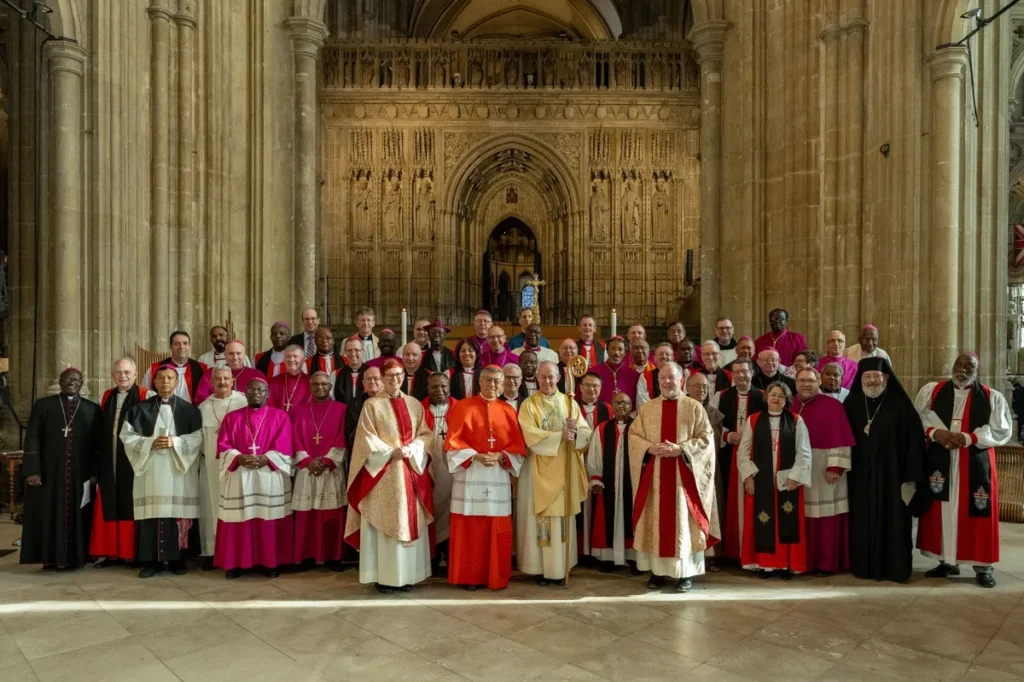
To achieve the goal of full, visible unity, the dialogue has advanced through a comprehensive, two-pronged strategy, embodied by two distinct yet complementary commissions:

  • The Anglican–Roman Catholic International Commission (ARCIC): Established in 1967, ARCIC is the official theological engine of the dialogue. Its mandate is to systematically address the deep, historic doctrinal divisions on topics such as the Eucharist, Ministry, and Authority. Its rigorous theological work, conducted over three distinct phases, has produced a series of landmark “agreed statements” that have created a new context for unity.
  • The International Anglican–Roman Catholic Commission on Unity and Mission (IARCCUM): Formed in 2001, IARCCUM focuses on the practical and pastoral dimensions of our relationship. Its task is to examine how the theological agreements of ARCIC can be received and translated into a shared life of common mission and witness in the world. IARCCUM encourages bishops, dioceses, and parishes to grow together through practical cooperation and spiritual partnership.

A defining feature of the relationship has been the consistent, personal commitment of the principals of both communions. Since the historic meeting in 1966, successive Popes and Archbishops of Canterbury have met regularly, their joint pilgrimages and common declarations providing vital inspiration and authority to the formal dialogue.

This high-level engagement is not merely symbolic. The close relationship between Pope Francis and Archbishop Justin Welby, for example, has led to tangible joint initiatives, including a Vatican retreat for South Sudan’s political leaders and the Pope’s participation in the Anglican-led “Thy Kingdom Come” global prayer movement. These actions demonstrate a growing partnership in addressing the needs of the world.

After more than five decades of dialogue, the relationship has matured from resolving past conflicts to a new phase of mutual learning. The work of ARCIC III is now guided by “Receptive Ecumenism,” a method where each tradition seeks to receive gifts from the other for its own enrichment and reform. This approach reflects a deep and established trust, as two pilgrim communions walk together on the way towards the full, visible unity that is Christ’s prayer for his Church.