The International Anglican–Roman Catholic Commission on Unity and Mission (IARCCUM)

Established in 2001 as a direct outcome of a landmark meeting of bishops in Mississauga, Canada, the International Anglican–Roman Catholic Commission on Unity and Mission (IARCCUM) was created to translate the significant agreement in faith between the two communions into shared mission and common life.

Complementing the theological dialogue of ARCIC, IARCCUM is an episcopal commission with a distinct and practical focus; its mandate is to explore how the theological consensus already achieved necessitates and compels joint witness in the world, moving the relationship from discussing what is believed to discerning how to live and act together.

Through its reports and meetings, the commission offers practical suggestions and a “call for action,” fostering discussion, reflection, and the joint study of foundational theological agreements to help Anglicans and Roman Catholics grow together in a shared witness to the world.
Key Areas of Work

The work of the Commission is focused on translating theological agreement into tangible action.

These sections provide an overview of IARCCUM’s journey, from its historical foundations and unique methodology to the key themes that have emerged from its recent work in fostering shared mission and witness across the globe.

IARCCUM was created following a meeting of Anglican and Roman Catholic bishops in Mississauga, Canada, in May 2000. There, the bishops acknowledged the “very impressive degree of agreement in faith that already exists” and called for a “new stage” in the relationship, characterized by a “communion of joint commitment to our common mission in the world”.

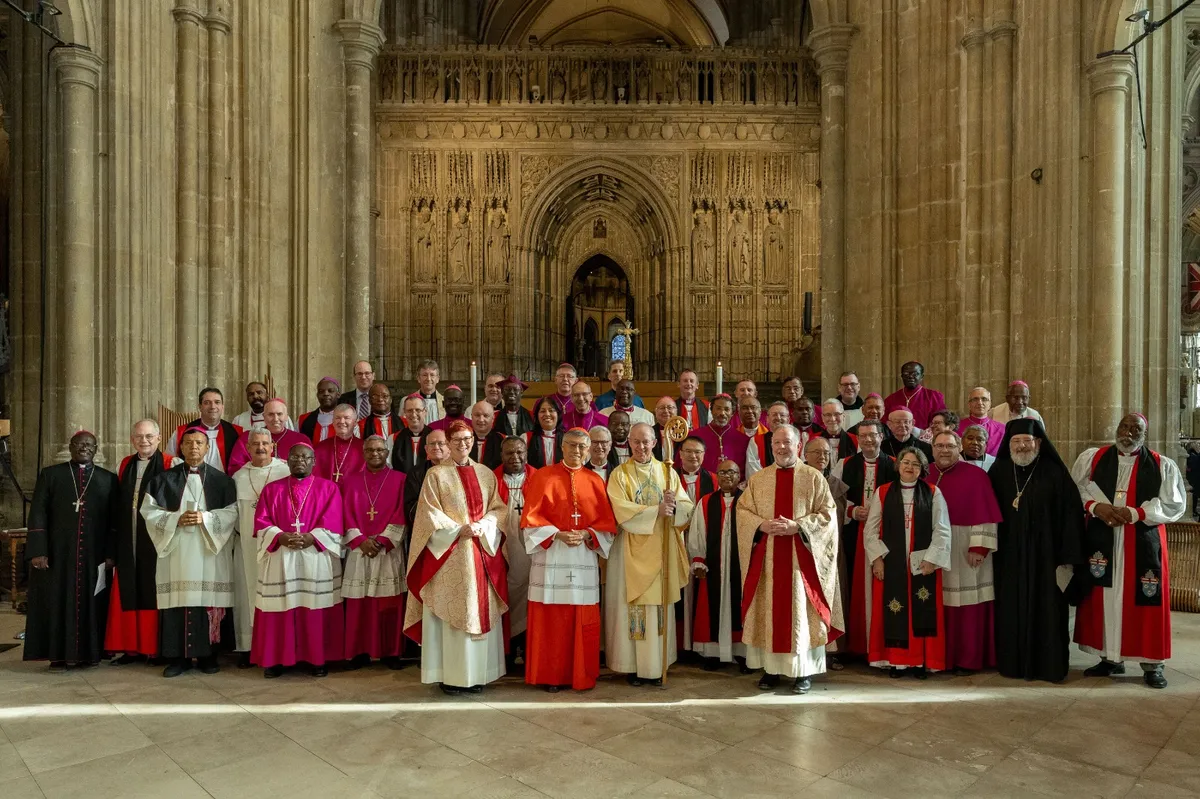
Since its establishment in 2001, the commission has produced key documents such as “Growing Together in Unity and Mission” and the 2024 statement “Our Common Witness, Calling and Commitment.” A significant recent milestone was the “Growing Together” joint pilgrimage and summit in Rome and Canterbury in January 2024.

A central and distinctive methodology for IARCCUM is the ‘Bishop Pairs’ initiative, which involves Anglican and Roman Catholic bishops from the same country or region collaborating to promote shared mission and joint witness locally.

The significance of this approach is underscored by the joint commissioning of these bishop pairs by the Pope and the Archbishop of Canterbury on multiple occasions, notably in 2016 and 2024. This model reflects a strategic commitment to localizing and embodying the ecumenical dialogue, ensuring that high-level agreements are translated into tangible, relational engagement at a diocesan level.

The work of IARCCUM, particularly from its 2024 summit, focuses on several key themes. Common Witness is central, with a focus on the testimony of modern martyrs and a call for unity in a “world so scarred and wounded”. This is built upon Friendship, which is seen as essential for ecumenism and the foundation for true Synodality—a process of walking together that puts “relationships at the centre of the Church’s life”.

Joint Prayer is a core activity, with the shared experience of worship providing a “further impetus to continue this journey” towards full eucharistic communion. The scope of Social Justice and Mission has also broadened significantly to include repentance for the sins of colonization and abuse, a commitment to care for our common home, and a focus on amplifying the voices of the poor and marginalised.

“Ecumenism is the rediscovery of sisters and brothers from whom we have been too long separated.”

“Synodality is not just about governance, but about putting relationships at the centre of the Church’s life: brothers and sisters, then the structures.”

“A primary and urgent aspect of our common mission as Catholics and Anglicans is to care for our common home, which is under threat and at risk of collapse.”