
What Anglicans Believe
The Sacraments: Signs of God’s Grace
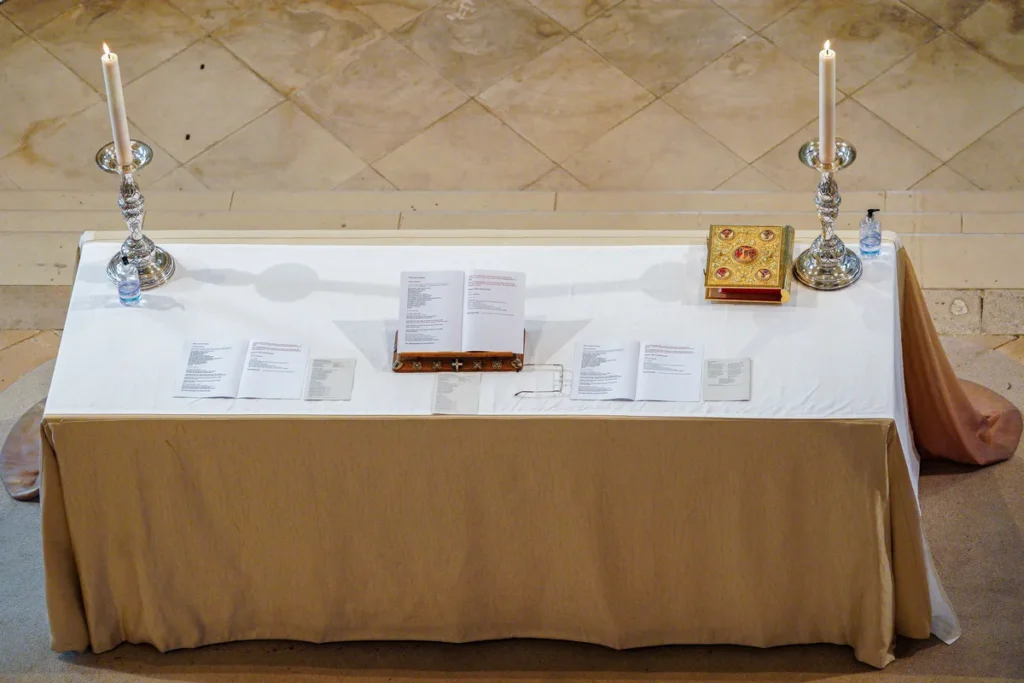
What is a Sacrament?
For Anglicans, a sacrament is ‘an outward and visible sign of an inward and spiritual grace’. This means they are physical, tangible actions, instituted by Christ, that serve as effective channels for God’s divine grace and work in our lives.
They are not just memorials or empty symbols; they are efficacious, meaning they truly effect what they signify. This understanding is at the heart of Anglican worship, where our relationship with God is nurtured through the inseparable pairing of ‘word and sacrament’—the reading of Scripture and the celebration of these holy rites.
This connection between worship and belief is a foundational part of Anglican identity, captured in the ancient Christian principle lex orandi, lex credendi (the law of praying is the law of believing). Our doctrine is expressed and preserved in our corporate worship.
As a core part of what Anglicans believe, the sacraments are indispensable to our life of faith.
The Two Great Sacraments of the Gospel
The Anglican Communion gives special status to two sacraments: Baptism and The Eucharist (also known as Holy Communion or the Lord’s Supper).
These are often called ‘dominical sacraments’ because they were directly ordained by Christ in the Gospels. They are understood as ‘generally necessary to salvation’ for all Christians, forming the foundation of Christian life and mission.
Baptism: Initiation and Unity
Baptism is the foundational sacrament of initiation through which a person becomes a member of God’s Church, the Body of Christ. It is far more than a symbolic washing; it is a profound participation in the saving work of Jesus.
- Participation in Christ: Through the waters of baptism, the believer is united with Christ in his death, burial, and resurrection
- Gift of the Spirit: In baptism, God bestows the gift and promise of the Holy Spirit, sealing the believer as Christ’s own forever
- A Bond of Unity: Our common Baptism is the ‘basic bond of unity’ that Anglicans share with all Christians
The Eucharist (Holy Communion): Sustenance and Communion
If Baptism is the sacrament of our initiation, the Eucharist is the shared ‘family meal’ of the Church that continually sustains and nourishes us.
- Anamnesis (Sacramental Memorial): The Eucharist is a sacramental memorial where, by the power of the Holy Spirit, the one, unrepeatable sacrifice of Christ on the cross is ‘made present and effective’
- The Real Presence: Anglicans affirm that Christ is truly and really present in the Eucharist. The bread and wine ‘become’ the body and blood of Christ in a sacramental sense to transform the people
The Five Other Sacramental Rites
Beyond the two great sacraments, the Anglican tradition celebrates five other sacramental rites. These are true and valuable means of communicating God’s grace for specific moments and callings.
- Confirmation: A mature, public affirmation of Baptismal vows, strengthened by the Holy Spirit for a life of discipleship
- Ordination (Holy Orders): Also known as Holy Orders; the rite in which God gives grace and authority to bishops, priests, and deacons
- Matrimony (Holy Matrimony): A lifelong, faithful covenant between two people, serving as a sign of Christ’s love for his Church
- Reconciliation of a Penitent (Confession): Often called Confession; a rite where a person receives the assurance of pardon and the grace of absolution
- Anointing of the Sick (Healing): Commending the sick to God’s care, seeking spiritual and physical healing and the grace to endure with faith
Sacraments and Christian Unity
Our shared understanding of the sacraments, especially Baptism and the Eucharist, is a vital part of our dialogue with other Christian traditions. Reaching ‘substantial agreement’ on the Eucharist is a major, joyful step toward the visible unity of all Christians that Christ wills for his Church.
