
The Nairobi-Cairo Proposals
The Nairobi-Cairo Proposals are a theological document published in 2024
that ask a fundamental question: what does it mean to be the Anglican Communion today? It lays out a fresh framework for how Anglican churches around the world can deepen their unity, in service of ‘seeking to walk together to the highest degree possible’.
The Nairobi-Cairo Proposals have been shaped by a diverse group of theologians and clergy from around the world, who are members of IASCUFO (Inter-Anglican Standing Commission on Unity, Faith and Order).
The papers were developed in response to a resolution passed at ACC-18, which commissioned IASCUFO to explore theological questions around ‘structure and decision-making to help address our differences in the Anglican Communion’.
The papers were discussed by the Anglican Consultative Council at ACC-19 which met in Belfast, between 28 June – 4 July 2026. Following the discussions a set of resolutions were passed about The Nairobi-Cairo Proposals.
Read the Proposals
These are the key documents to read in relation to The Nairobi-Cairo Proposals. The most recent and current papers are ‘The Supplement Paper’ and ‘FAQ’.
IASCUFO at ACC-19: What were the outcomes?
IASCUFO presented their work to Members of the Anglican Consultative Council at ‘ACC-19 ‘, which met in Belfast, 28 June-4 July 2026.
Presenting The Nairobi-Cairo Proposals to ACC
June 2026: The Chair of IASCUFO, the Rt Revd Graham Tomlin and other commission members, the Very Revd Dr Sarah Rowland Jones and Canon Andrew Khoo, gave a presentation at ACC-19 to offer ‘The Nairobi-Cairo Proposals’ to ACC members.
He emphasised that IASCUFO’s work was being ‘offered’ to ACC Members for their ongoing discernment and reflection saying: ‘…. our hope is that our discussions over the next few days will not be a matter of whether you’re for or against The Nairobi-Cairo Proposals, whether we accept them or we reject them. But it is rather for you as the ACC to decide on how to draw on and to develop what we have offered in discerning what will best help us journey onwards together with honesty and generosity towards one another.’
The Members of the ACC respond to The Nairobi-Cairo Proposals: The ACC affirmed the need for “relationships and trust to grow” when it comes to discerning the Anglican Communion’s structures and life together. The ACC received The Nairobi-Cairo Proposals as resources for “continuing discernment”, and passed a resolution calling for further dialogue across the Anglican Communion over the next three years.

What have been the responses to the proposals?
There has been a wide range of responses to the work of IASCUFO on The Nairobi-Cairo Proposals, including formal responses from Anglican Member churches, news updates, scholarly articles and opinion pieces.
Read a Compilation of Responses
Anglican News has featured a compilation of responses to The Nairobi-Cairo Proposals, shared before and after ACC-19, which include:

Understand the journey: 2023-2026
IASCUFO’s work on The Nairobi-Cairo Proposals began after being commissioned by members of the Anglican Consultative Council in 2023 at ACC-18 in Ghana. Since then, the Commission have developed theological papers and consulted widely on their work, in preparation to report back to ACC-19 in 2026.
2023: ACC-18 Commissions IASCUFO
February 2023: At the Anglican Consultative Council meeting ‘ACC-18’, in Accra, Ghana, IASCUFO presented a paper to ACC Members called ‘Good Differentiation’. It proposed exploring how Anglicans might address difference and division in a theologically faithful way.
ACC Members then shared a resolution and commissioned IASCUFO to explore theological questions around ‘structure and decision-making to help address our differences in the Anglican Communion’. The Council also affirmed the importance of seeking ‘to walk together to the highest degree possible’.

2023: IASCUFO meet in Nairobi and Cairo
September-December 2023: Representatives of IASCUFO met online and then the commission met in person in Nairobi, Kenya, in September 2023. At IASCUFO’s annual meeting in Cairo in December 2023, hosted by the Episcopal/Anglican Province of Alexandria, IASCUFO focused on the theological exploration requested by ACC-18. The Commission reviewed the history of Anglican faith and order in the light of the Communion’s growth, contemporary disagreements and longstanding commitment to Christian unity.

2024: IASCUFO present at the Primates’ Meeting
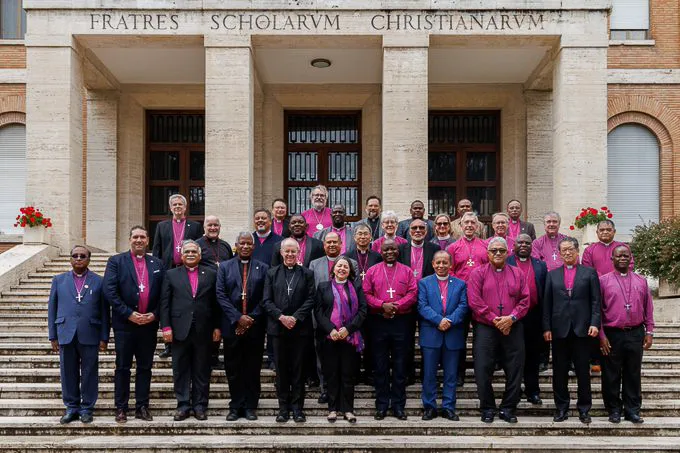
April 2024: As part of shaping their work, IASCUFO presented a draft of the paper for consultation at the Anglican Primates’ Meeting in Rome in 2024. The Primates devoted four sessions to the paper. It was then refined through conversation with the Primates’ Standing Committee, the Archbishop of Canterbury and the Standing Committee of the ACC. The Primates’ Communiqué outlined their responses in points 10-15.
2024: IASCUFO publish The Nairobi-Cairo Proposals
Advent 2024: Published in Advent 2024, The Nairobi-Cairo Proposals set out IASCUFO’s recommendations, shared as ‘an offer’ for consideration and reflection to the Anglican Communion.
In December 2024, shortly after the publication of the proposals, IASCUFO met in Kuala Lumpur, Malaysia. In a communiqué, IASCUFO said it sensed that the Communion may be moving from a season of ‘raw and antagonistic division’ into a longer process of reckoning, resolution, healing and rebuilding trust. The Commission called on the churches of the Communion to cultivate generosity in the spirit of The Nairobi-Cairo Proposals.

2025: IASCUFO reflect and refine
December 2025: Review and discussion of The Nairobi-Cairo Proposals formed the major part of the Commission’s work in Rome.
IASCUFO considered responses to The Nairobi-Cairo Proposals received since publication in Advent 2024 and explored supplementary work in preparation for reporting to ACC-19, scheduled for Belfast in 2026. They worked to reflect and refine some of the recommendations of The Nairobi-Cairo Proposals.

2026: IASCUFO publish Supplement Paper and FAQ
Lent 2026: Building on feedback on The Nairobi-Cairo Proposals, IASCUFO published a Supplement Paper and a ‘Frequently Asked Questions’ document. Members of IASCUFO also described their work in a short film about the process.
The Supplement offers some refinements to The Nairobi-Cairo work, emphasising the importance of acknowledging developments in the structures of the Communion since 1930, recognising that communion has been damaged between some churches and seeking ways to ensure that the Communion’s leadership is broadened and shared.
Anglican voices: The offer of The Nairobi-Cairo Proposals
The work and thinking of The Nairobi-Cairo Proposals on the identity and structures of the Anglican Communion remind us that the Church is called to navigate differences in the light of Christ’s call to unity. The proposal also seek to respond faithfully to the fast-changing Anglican Communion in a post-colonial age. As we prepare for ACC, I look forward to sharing the fruit of IASCUFO’s labours as presented in The Nairobi-Cairo Proposals. In the power of God’s Spirit, I pray that we may have the courage and honesty to attend to deeply held disagreements within our communion, with the conviction and obedience to respond to Christ’s call.

The Anglican Consultative Council commissioned IASCUFO’s work in 2023. The Nairobi-Cairo Proposals are the result of international collaboration, representing diverse voices from around the Communion. They are offered to strengthen our global Anglican family. I pray that they will be received with prayerful consideration in the months ahead.

The Nairobi-Cairo Proposals exhort us as churches and as a Communion to ‘wait for one another,’ and to seek, under the Spirit’s guidance, the highest form of communion possible among us. The proposals give us the next steps forward, a glimpse of a new, more diverse Communion that will nurture our churches in the midst of serious division. May it be a sign of healing, of reconciliation, and renewal!

As we navigate the complexities of our future as Anglicans, we will do well to remember the importance of empathy, understanding, and collaboration. IASCUFO’s Nairobi-Cairo Proposals is a historical document for such a time as this. It lays the groundwork to continue in fellowship. Even in moments of disagreement, there is always an opportunity for dialogue and mutual respect. I pray for open hearts and minds in seeking common ground and solutions that benefit us all.

