ECUMENICAL dialogue

The Anglican–Lutheran Dialogue

The relationship between the Anglican Communion and the Lutheran World Federation is widely recognised as one of the most successful ecumenical engagements in Christian history.

Introduction

The success of the Anglican-Lutheran dialogue is rooted in a unique historical starting point: a “distance of friendship” where neither church had formally condemned the other. In contrast to other dialogues often burdened by centuries of mutual anathemas, this relationship began without such barriers.

This historical openness allowed the dialogue to move rapidly from theological conversation in the 1970s to structural “full communion” in the 1990s. Today, through major regional agreements like the Porvoo Communion (Europe) and Called to Common Mission (USA), Anglicans and Lutherans in many parts of the world now share a common ministry and common sacraments, founded in a shared faith.

The Dialogue Today
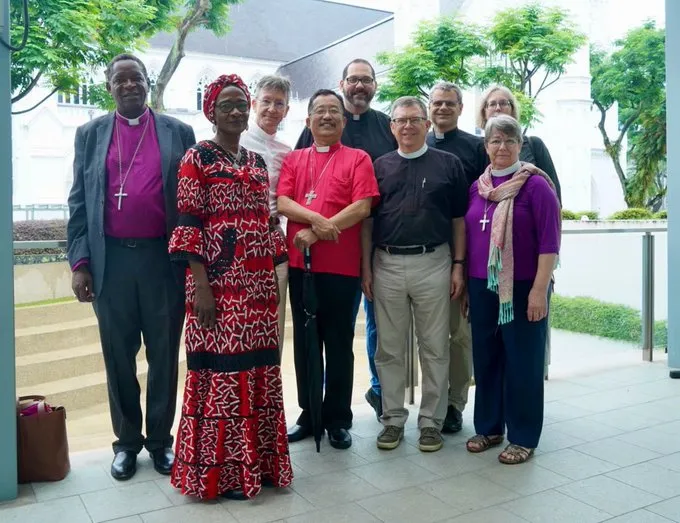
The current phase of international engagement is led by the Anglican–Lutheran International Commission on Unity and Mission (ALICUM).

Recognising that the most vibrant examples of unity are often found at the regional level, ALICUM operates as a “dispersed commission.” Rather than a centralized drafting committee, it functions through regional pairings of bishops and leaders who work together on the ground. This model prioritises Joint Advocacy, moving the focus from resolving doctrinal disputes to living out “baptismal unity” in practical service to the world.

A primary remit of the current commission is to address the complex ecclesiological issue of “transitivity.”

While full communion exists between Anglicans and Lutherans in specific regions (like Northern Europe or North America), these agreements do not yet automatically extend to other parts of the world. ALICUM is tasked with “clarifying questions of transitivity”—determining how a relationship established in one region can have ecclesiological consequences for the global Church, knitting these regional breakthroughs into a universal reality.

In 2025, the commission met in Amman, Jordan, where the pairs renewed their baptismal vows at the Jordan River. The summit emphasised solidarity with the “Living Stones” (Christians of the Holy Land) and established a new Memorandum of Understanding for Joint Advocacy, focusing on climate justice and peace-building.

Through the theological consensus achieved in the 1980s, several regions have established full communion, recognizing the historic episcopate as a “sign” rather than a “guarantee” of unity.

  • The Porvoo Communion (1992): Bringing together Anglican Churches in Great Britain and Ireland with Lutheran Churches in the Nordic and Baltic nations.
  • Called to Common Mission (1999): Establishing full communion between The Episcopal Church (USA) and the Evangelical Lutheran Church in America.
  • The Waterloo Declaration (2001): Establishing full communion between the Anglican Church of Canada and the Evangelical Lutheran Church in Canada.
  • The Meissen Agreement (1988): Establishing mutual recognition and eucharistic hospitality between the Church of England and the Evangelical Church in Germany (EKD).
Key documents:
  • The Niagara Report (1987) The breakthrough report that reframed the Historic Episcopate as a “sign” rather than a “guarantee” of apostolicity, unlocking the door to full communion.
  • The Diaconate as Ecumenical Opportunity (The Hanover Report, 1996) A groundbreaking study proposing the diaconate not as a barrier, but as a unique instrument for “joint oversight” and shared mission.
  • To Love and Serve the Lord (The Jerusalem Report, 2012) The report of ALIC III, exploring how the shared call to “diakonia” (service) shapes the church’s identity and mission.
  • Growth in Communion (2002) The comprehensive report detailing the establishment of the International Commission (ALIC) and its mandate to guide the reception of regional agreements.